
Rongai Route Kilimanjaro
Kilimanjaro's only northern approach — a quiet, remote path through wilderness rarely shared with other climbers.
Rongai Route – Kilimanjaro's Remote Northern Approach
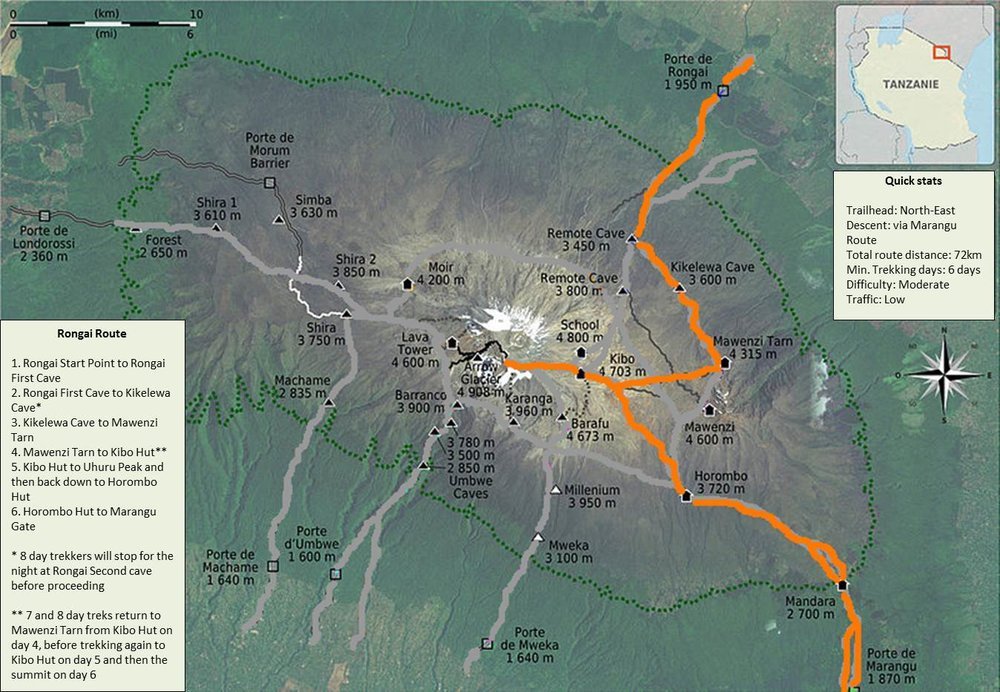
The Rongai Route is the only path up Kilimanjaro that begins on the mountain's northern side, close to the Kenyan border, before curving around to join the summit trail near Kibo. Because so few climbers start from the north, Rongai is by far the quietest of Kilimanjaro's standard routes, offering a genuine sense of wilderness from the very first day.
What sets Rongai apart is its character: the northern slopes sit in Kilimanjaro's rain shadow, so the trail tends to be drier underfoot than the southern approaches, and the forest here is less dense, giving way earlier to open moorland with sweeping views toward the Kenyan plains. Wildlife sightings — colobus monkeys, and occasionally buffalo or elephant tracks in the lower forest — are more common here than on the busier southern routes.
Climbers ascend via Rongai but descend via the Marangu Route, which means the route offers two very different landscapes across the trip. The gentle gradient makes it a comfortable walking route overall, but as with Marangu, the standard itinerary benefits enormously from an extra acclimatization day — which is why we recommend the 7-day version over the shorter 6-day option.
Whether you're drawn to it for the solitude, the drier trail, or the chance of spotting wildlife along the way, Rongai offers one of the most peaceful ways to reach the roof of Africa.
Why Climbers Choose The Rongai Route
The Rongai Route appeals to climbers who want a quieter, more remote experience without sacrificing a manageable, well-graded trail.
1. The Quietest Route On The Mountain
Because it starts on the seldom-used northern side, Rongai sees far fewer climbers than routes like Machame or Marangu, particularly in the lower camps, giving a more secluded, unhurried feel to the early days of the trek.
2. Drier Trail And Steadier Weather
Sitting in Kilimanjaro's rain shadow, the northern slopes tend to receive less rainfall than the southern approaches, which often means firmer underfoot conditions and clearer skies, even in shoulder seasons.
3. A Gentle, Gradual Ascent
Like Marangu, Rongai follows a broad, evenly graded path with no scrambling sections, making it approachable for trekkers who want a straightforward walking route without technical terrain.
4. Two Landscapes In One Trip
Because the descent follows the Marangu Route rather than retracing the ascent, climbers experience two distinct sides of the mountain across a single trek — the remote northern slopes going up, and the forested southeastern trail coming down.
What To Expect On The Rongai Route Kilimanjaro
Rongai passes through Kilimanjaro's familiar climate zones, but the northern setting gives each stage a distinct look and feel compared with the southern routes.
1. Forest Zone
The climb begins at Rongai Gate near the Kenyan border, passing through drier, more open pine forest than the dense rainforest found on the southern routes, with a gentle, steady incline from the start.
2. Moorland Zone
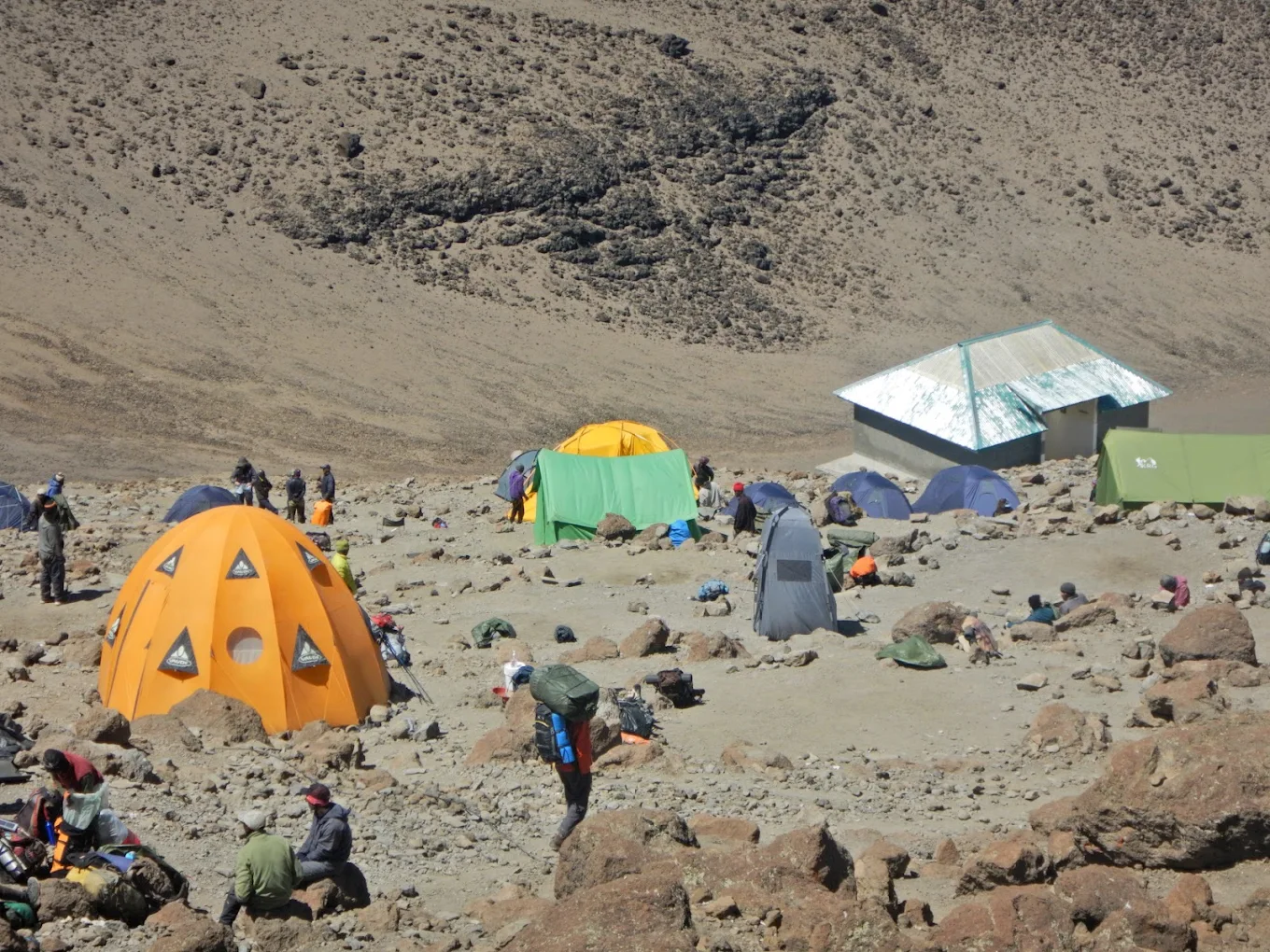
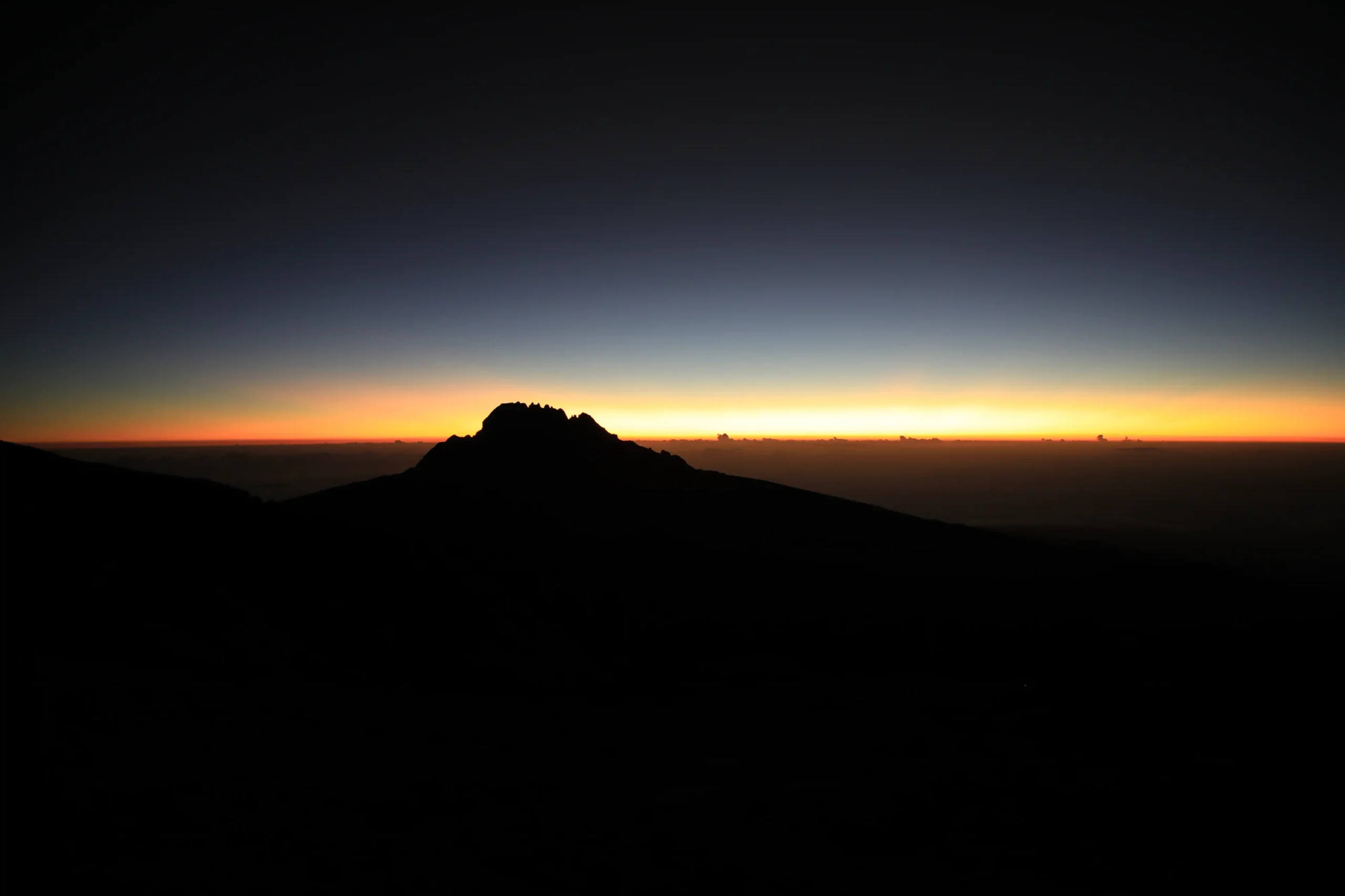
The forest thins quickly into rolling moorland, with wide views north toward the Kenyan plains and, on clear days, Mount Kenya in the distance. Many climbers camp near Kikelewa Caves or Mawenzi Tarn in this zone, beneath the jagged profile of Mawenzi peak.
3. Alpine Desert Zone
Beyond Mawenzi Tarn, the trail crosses the exposed alpine desert of the saddle between Mawenzi and Kibo before reaching Kibo Hut, the final camp before the summit attempt. Vegetation is sparse and temperature swings between day and night are significant.
4. Arctic Zone And Summit Push
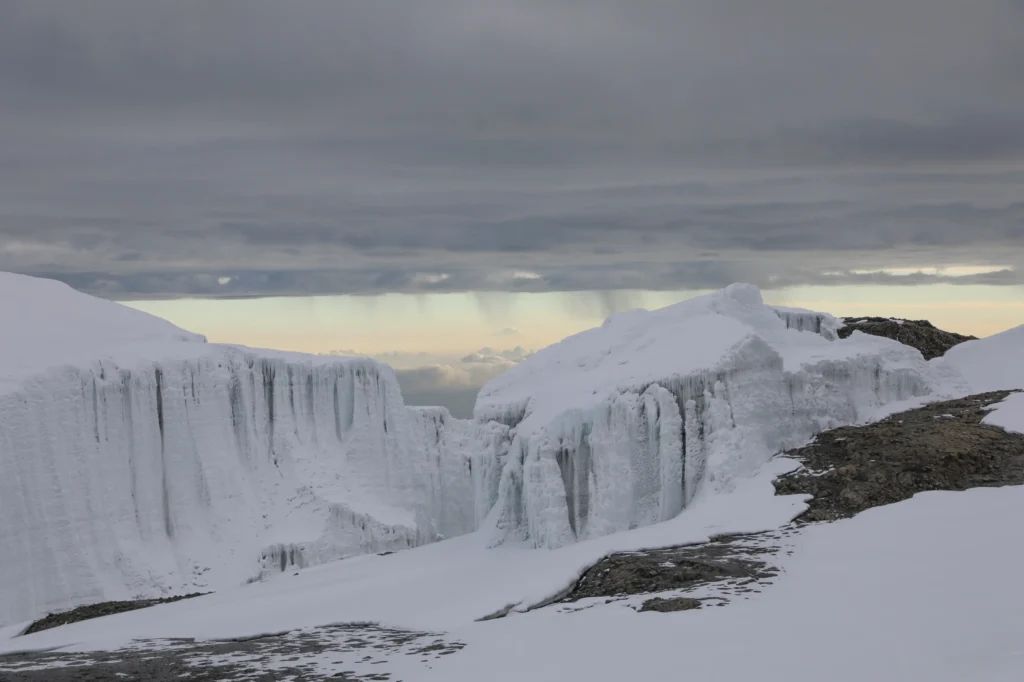
From Kibo Hut, the final ascent to Uhuru Peak crosses steep scree and patches of snow and ice higher up. As on the Marangu side, the summit attempt typically begins around midnight, reaching Gilman's Point and then Uhuru Peak around sunrise. Descent continues down the Marangu Route through Horombo and back into the rainforest.
5. Expert Support Throughout The Journey
Experienced guides and porters accompany the group at every stage, managing camp logistics, preparing meals, and monitoring each climber's health and progress to help maximise both safety and enjoyment.
Best Time To Climb The Rongai Route
1. Dry Season (Late June To October)
The most popular window to climb Rongai, with firm trails and generally clear views. Even during this busier period, Rongai stays noticeably quieter than the southern routes.
2. Dry Season (Late December To March)
A second reliable dry window with stable weather, slightly warmer than the mid-year season and equally suited to Rongai's drier northern trail.
3. Rainy Seasons (April, May And November)
These months bring more rain and reduced visibility, though the rain shadow effect means Rongai is often drier underfoot than the southern routes even during this period. Camps are at their quietest.
Available Rongai Route Packages
Below you will find our current Rongai Route packages, including detailed itineraries, pricing, and what is included in each option. Choose the package that best suits your schedule, budget, and level of experience, and our team will be happy to help you prepare for this unforgettable journey to the roof of Africa.
6-Day Kilimanjaro Trekking – Umbwe Route
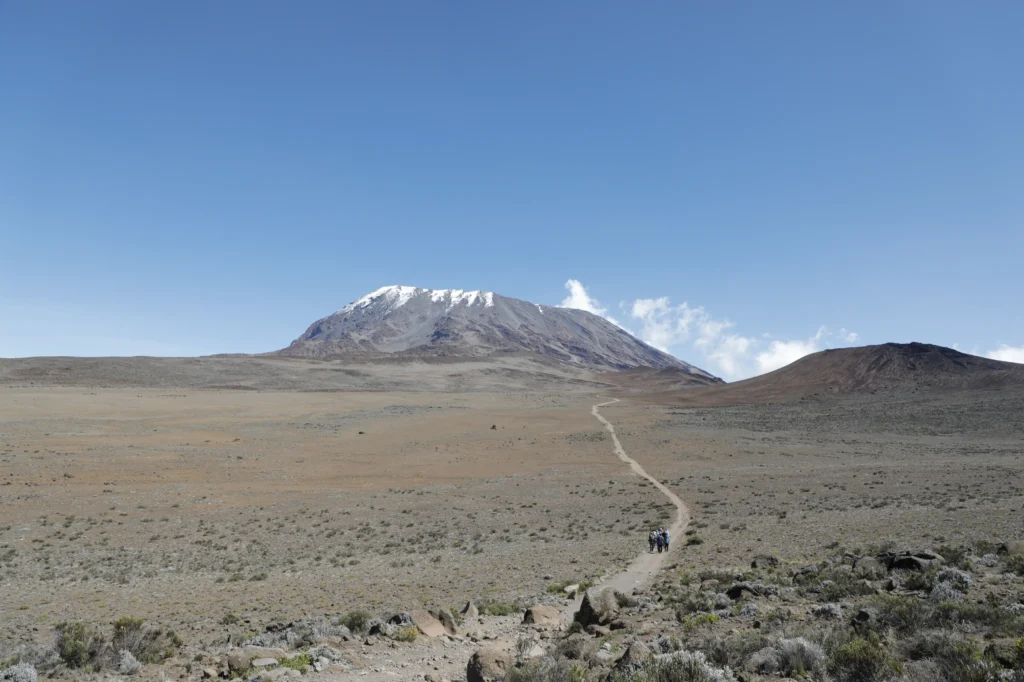
6-Day Kilimanjaro Trekking – Rongai Route
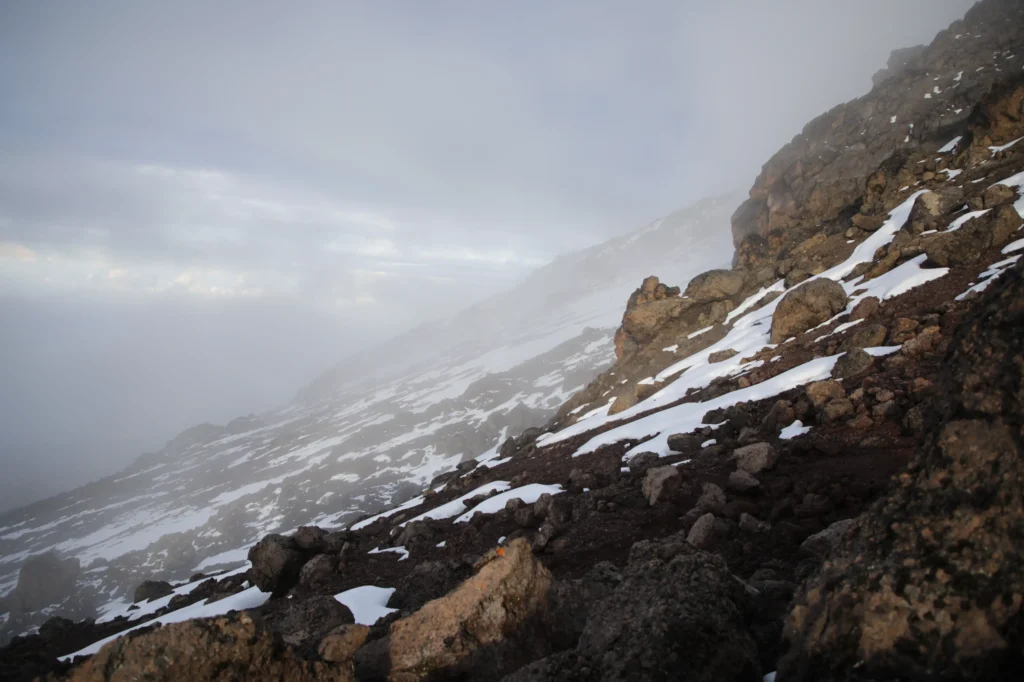
7-Day Kilimanjaro Trekking – Rongai Route
Frequently Asked Questions — Rongai Route
Everything you need to know about climbing Kilimanjaro via the Rongai Route with Dubu Adventures.
How many days does the Rongai Route take?
The Rongai route is usually done over 6 or 7 days. We strongly recommend the 7-day option, since the extra acclimatization day substantially improves comfort and the chances of a successful summit.
What is the success rate of the Rongai Route?
Success rates on Rongai are generally higher than on the shorter Marangu itinerary, thanks to its longer standard duration. A 6-day climb typically sees success rates in the 70-80% range, while the 7-day itinerary improves this to roughly 80-85%.
Is the Rongai Route good for beginners?
Yes — its gentle, well-graded trail and lack of technical scrambling make it approachable for first-time trekkers. We still recommend the 7-day version for beginners, since the extra acclimatization night matters more than the easier terrain.
Where does the Rongai Route start and end?
The Rongai Route begins at Rongai (Nalemuru) Gate on the northern side of Mount Kilimanjaro, near the Kenyan border, and ends at Marangu Gate on the southeastern side, since climbers descend via the Marangu Route.
What accommodation is used on the Rongai Route?
Climbers sleep in tented camps for the ascent, then switch to Marangu's mountain huts — Horombo and Mandara — for the descent, giving a mix of both camping styles across the trip.
Is the Rongai Route crowded?
No — Rongai is widely considered the quietest standard route on the mountain, particularly in its lower camps, since it approaches from the seldom-used northern side.
Does the Rongai Route have a Barranco Wall or similar scramble?
No. Like Marangu, Rongai follows a gently graded path with no scrambling sections, making it one of the more technically straightforward routes on the mountain.
When is the best time to climb the Rongai Route?
The two dry seasons — late June to October, and late December to March — offer the most stable weather and clearest views. The rainy months of April, May, and November are quieter still, and the route's rain-shadow position means trails often stay drier than on southern routes even then.
What is included in a Rongai Route package?
Our Rongai Route packages include park fees and camp/hut fees, professional guides and porters, all meals on the mountain, and airport or hotel transfers to and from the trailhead. Full inclusions are listed on each individual package.
Ready to climb the Rongai Route? Our experienced team is here to help you plan every detail of your Kilimanjaro adventure — from the right package to the right preparation.
Get in touch
Speak directly with the team planning your trip — no call centres, no middlemen.
- Airport Road, Arusha, Tanzania
- +255 686 371 755
- adventuresdubu@gmail.com
- Response time: within 24 hours, usually sooner
Send an enquiry
Tell us your travel dates, group size and what you'd like to see — we'll build a custom quote around it.